Saturday, June 10, 2006

Settling in to Midpines


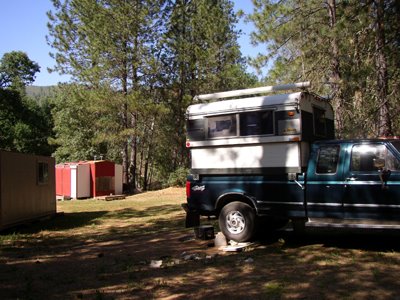
Today was the first time since the last post that Biggreentruck used any fuel of any kind. Ah, the benefits of living and working at the same place!

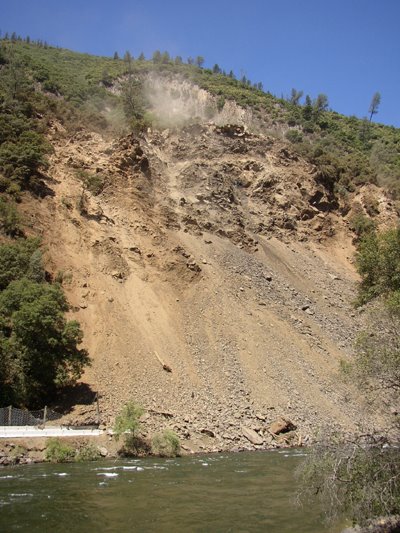
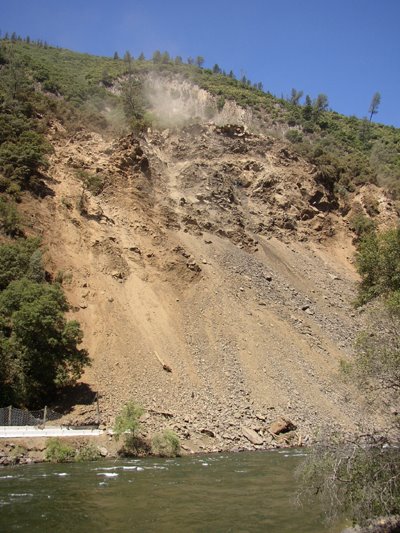
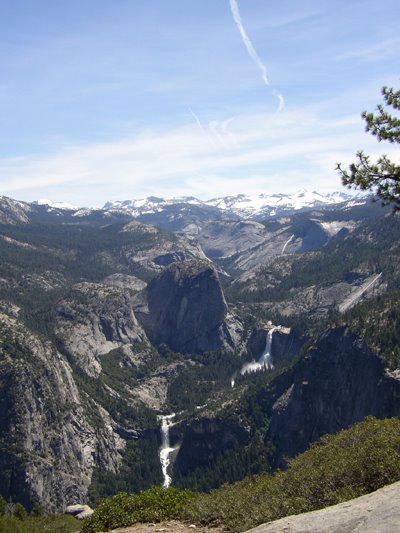
Yosemite is really close as the crow flies to Midpines. The regional bus even stops right in front of basecamp. Alas, the rockslide on Hwy 140 has isolated us from El Portal.
The 45 minute trip is now a 2 1/2 hour journey. The communities of Midpines and Mariposa are definitely feeling loss of tourist traffic into the Park. We went last weekend to check out the slide. Geology is actually exciting when it's happening in real time!


Sunday, May 21, 2006

Yuma to Midpines

Biggreentruck had a great time sitting around in the 100+ degree heat of Yuma, Arizona while I went on a couple of adventures on the Corps of Engineer designed lower Colorado River. Between the Marines, the Proving Ground and the Border Patrol, one can imagine what life around Checkpoint Charlie might have been like. And now we're adding the National Guard?

Yuma to Jtree: purging the wvo from the engine is much less of an issue when it's 107 outside and the engine doesn't really cool down while you're in Dairy Queen. Of course, you do have clean up more melted ice cream. The climb from the Sonoran Desert to the Mojave through the Park may take longer than staying on the highway but the scenery, wildlife and total lack of traffic are all worth it.

Jtree to Victorville: stopping in to meet jeffnlisa from the greasecar forums. Jeffnlisa kindly shared some filtered oil. Biggreentruck modeled its conversion to help shed light on the differences between converting a Jetta and an F250 as well as between Greasecar and Frybrid. (Biggreentruck wants a little vw friend to play with someday.) Biggreentruck is looking forward to being settled for a little while so it can share oil with other travellers.

Victorville to Midpines: ah, home....at least for the next 3 months. Biggreentruck finally has a parking place all its own surrounded by trees, open space, great people and even a little stream. Pop up the camper, organize the gear, clean up some grease spots, talk to some restaurants about oil. Next project: get the electric in the camper working.

Grease specific: Can anyone explain the 180 degree rule? Happy Earth research disputes the idea that you must be at 180 degrees to get the appropriate viscocity but shows that different oils have different optimum temps (you can never be sure what kind of oil you are burning). The problems with trying to burn cold oil are obvious but can oil ever be too hot (assuming the engine isn't overheating)?

Friday, May 12, 2006

Happy Earth Recycling


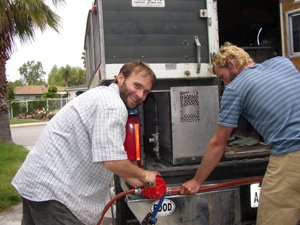
Shea, Chris and Biggreentruck at Happy Earth Recycling headquaters. The electric pumps were all out of order so we transferred almost 50 gallons of oil with the hand pump.

Sunday, May 07, 2006

Alternative Fuels in the Media

Biggreentruck has been pretty out of touch with the media over the last month or so. But, the folks in Vermont and Colorado report that veggie oil has been showing up on national television lately. We've been hearing a lot about ethanol (thanks GM) and biodiesel over the last several months while WVO has received less publicity. Does anybody know where the story on Lovecraft Biofuels in LA aired? I'd be interested to see/read it.

Here's a link to a related discussion on the BBC: http://newsforums.bbc.co.uk/nol/thread.jspa?threadID=1669&&edition=2&ttl=20060507210347

Photos of the recent fill-up adventure and biggreentruck's new handpump coming as soon as I get the camera batteries charged.

Sunday, April 23, 2006

A Baja Adventure


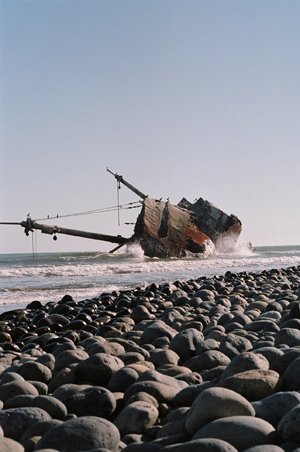
Biggreentruck stayed in Jtree while I went to Baja. Here are a few photos.

Thursday, April 06, 2006

Biofuels Packet Part 4- An Activity

Combustible oils can be found in many everyday 'feedstocks.' Here's an easy demonstration that's somewhat safer than the so called greasebombs I saw in Hidden Valley last weekend:

Materials- tea candle, lighter, whole orange or grapefruit
Time- about 5 minutes

Light the tea candle. Peel part of the orange or grapefruit (this is a good chance to talk about energy passing through the food web). With the white side of the peel toward you and the orange side of the peel toward the candle, squeeze the peel and watch the fireworks. If it doesn't work the first time, try a fresher piece of fruit.

Discussion- Does it work with other fruits? What other plants might contain similar oils? If you spray svo at the flame, this experiment doesn't work. Why not?

Saturday, April 01, 2006

Rumors can be True

There was a rumor going around the natty world that one of our former colleagues was brewing or filtering or wrestling or doing something with vegetable oil. Last weekend our friends Shea and Amber came out to Joshua Tree in Amber's beautiful biodiesel powered Jetta wagon and set the stories straight (I didn't ask about the wrestling). Seems they've a little company called Happy Earth Recycling and a small filtering plant. I stopped by on my way to Malibu (the 'Big Lebowski' running through my head as I dealt with the LA area traffic). Shea connected me with really nice oil, some hands-on time with a myriad of 12volt pumps and several cubies worth of great biofuels science information.

Then I spent 3 fun filled days at the MASH film site (Malibu Creek State Park) with high energy 6th graders (they'd never heard of MASH) and again zen-ed my way through 5 hours of traffic to get back to the sanctuary of Jtree. I make long (4-56 hour) commutes to work every few weeks but I'm ever so glad I don't have a 2 hour commute every day. The best part of the creep along "the 10," as I-10 is known out here, was knowing that I was not burning fossil fuels.

Back in Jtree, I met the boys from the Mariposa-based bluegrass band The Tresspassers. I showed Andy around biggreentruck and he showed me his veggie-powered rig. Luckily, there was a full cubie I had yet to pour into the tank and I was able to share the Happy Earth oil.

Jtree means climbing to most folks I know and biggreentruck has witnessed a few new developments on that front as well. The etriers finally came out of the bag of gear last weekend with a draws-hung lead of Willit's Pillar (A1) followed by leads of the Beaver Boulder bolt ladder (A1) and the nerve-wracking copperheads of Lost Lid (5.9, A4?) all with fixed gear. The aid-stravaganza was topped off by the gear intensive Butterfly Crack (A1/5.11).
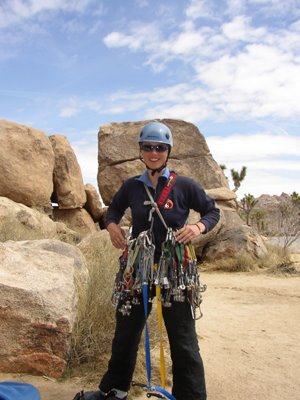
Two girls aid climbing raises a few eyebrows (which only motivates us more) and with the encouragement of Jtree master Todd Gordon, Sunshine and I are hooked on a whole new way of getting to the top of climbs we really want to toprope but are not gonna lead. Here's a photo of Sunshine all racked up.

Thursday, March 23, 2006

Life at the Warehouse

Biggreentruck has been hanging out behind a business park warehouse for a couple of weeks. That's the natty life- you work from home (where the vehicle is parked) unless you're driving a cube truck.

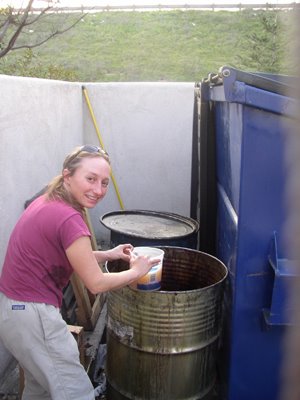
The oil supply adventures continue. We canvassed the regular haunts on Seaward with no luck. Then a gaggle of natties went karoke-ing at the Golden China. Jackpot! Jerry was glad to let me scoop from the dumpster even though the cooks didn't believe veggie oil would really power a truck. I filled my cubies-about 18 gals of nice looking oil- and plan to go back for more. Karoke is still weird.

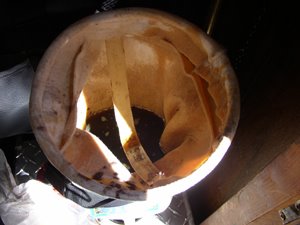
The current filtering system is working out pretty well--Greasecar mistakenly sent 1 micron bag filters (I ordered 5 micron). The finer mesh means filtering takes a little longer but it will prolong the life of the engine filter. The hi-tech funnel (an upside down gallon water jug with the bottom cut off) now has a retaining strap to prevent acccidental spills. And, the southern California sun gently warms the oil in the cubies so it flows nicely. The process is still time consuming but is getting easier and less messy with every fill-up.

Wednesday, March 15, 2006

Biofuels Packet Part 2

What is the difference between (bio)ethanol, biodiesel and straight vegetable oil?
First, ethanol can be used in gasoline engines while biodiesel and svo can be used in diesel engines. Second, ethanol and biodiesel are refined products that have undergone a chemical reaction before becoming a fuel while svo is more crude. Third, any of the three can be combined with petroleum fuels (to form E85 or B10 for instance) or used neat (100% ethanol, biodiesel or svo).

Ethanol is an alcohol made by converting starches to sugars and then fermenting the sugars. It's a bit like brewing beer.According to the EPA, bioethanol is ethanol made from 'celluosic biomass' (forestry waste, leftover materials from food crops like stalks and leaves, household waste, etc) instead of feedstocks like corn. Ethanol production involves several steps to convert complex sugars into simple sugars, ferment the sugars, recover the ethanol and reclaim the byproducts. Lignin is a significant byproduct of ethanol production which can be burnt to produce electricity.

The basic chemical process looks something like this:
C6H12O6 -->2 CH3CH2OH + 2 CO2
glucose-->ethanol + carbon dioxide

Biodiesel is an alkyl ester produced from oil from various feedstocks like vegetable oils, animal fats or other recycled greases. This process of transesterification requires heat and a catalyst to react the triglycerides in the oil with an alcohol forming alkyl esters and glycerin.

Triglycerides + Free Fatty Acids (<4%)--> Alkyl esters + glycerin

Biodiesel from vegetable oil, for instance, can be produced in a blender. The process is relatively simple: mix the catalyst with methanol, add the oil, mix and the resulting biodiesel and glycerin will separate into 2 layers. Excess methanol can be recovered to be used again and the glycerin can be composted or used in pharmaceutical and cosmetic products.

Straight vegetable oil is just that: the same oil you would use to fry a wonton. It can be reacted into biodiesel or it can be used as fuel immediately. Many svo drivers and small biodiesel producers use waste vegetable from restaurants as their 'feedstock.' Virgin (unused) oil can also be used. Svo does indeed combust in a diesel engine but needs to be preheated.
Thursday, March 02, 2006

Biofuels Curriculum Packet Part 1

These entries are the beginnings of a NAL biofuels info and curriculum packet that I hope to put together over the next couple of weeks. The goal is to provide natties with reasonable information and a few activities to share with their students when one of the biofuel-powered rigs is onsite. Biggreentruck welcomes comments and suggestions.

"The use of vegetable oils for engine fuels may seem insignificant today. But such oils may become in course of time as important as petroleum and the coal tar products of the present time." Rudolf Diesel, 1911.


What are biofuels?
According to the Department of Energy, biofuels are biomass that has been converted to fuels such as ethanol, methanol, methane and hydrogen.
Basically, biofuels are fuels and oils made from renewable resources. Some biofuels are used to power vehicles, others are used in heating or electricity generation. Ethanol (for gasoline engines) and biodiesel (for diesel engines) are two types of biofuels often talked about in the US media. Sources of biofuels include waste vegetable oil, energy or feedstock crops such as soy, corn, or rapeseed, municipal solid waste, and other biomass. Researchers are currently finding ways to create biofuels from algae, flies and fungi.

This packet will focus on biofuels as alternatives to petroleum fuels for transportation.

Wednesday, February 22, 2006

Photo for the Family


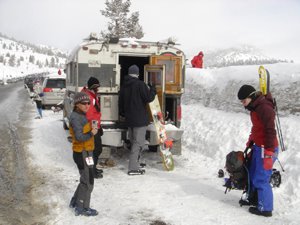
Skiing the Tahoe backcountry. 22 February 2006. That's me

Hanging Out in Tahoe


Biggreentruck has had a few new experiences this week: it got its first taste of biodiesel, it hosted its first party and it had a successful, if somewhat odd, oil gathering adventure.

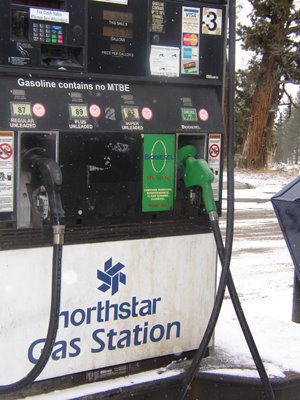
On the way up to Northstar to ski with a couple of natties last week, we passed the Northstar fueling station where B10 can be had at the pump. I know B10 is barely biodiesel but it's better than the B5 available down in Reno (that fuel required a 7 day waiting period--no idea why). And, it was the same price B0 in town.

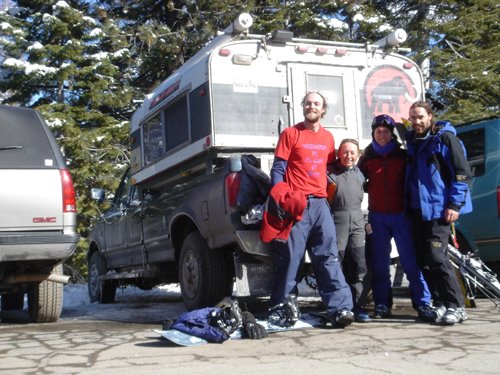
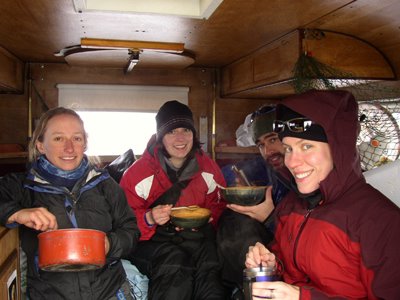
The CHOSS Reunion provided biggreentruck with a chance to have some visitors over for lunch. It was reminiscent of the Westy days and while we welcomed biggreentruck into the CHOSS family we mourned the Westfalia a bit too. Being able to see the truck over the huge snowbanks on Mt. Rose Highway was a definite bonus that made it easier for all of us to make our way back to basecamp after our backcountry skiing adventures. Now for the oil story: everything I read tells me biggreentruck should get Chinese Restaurant oil as a first choice. Well, Incline Village, NV, has a one of those so biggreentruck pulled in there this afternoon.
-'Hi, I have a rather odd request....'
-'?Como?'
-'Do you have any used vegetable oil?'
-'?Mande?....oh, si!'

-'What kind of oil is it?'
-'C***eed oil'
-'huh? Canola? Soy?'
-'No, no C***eed. It's from a seed.'
-'Uh, ok great! Thanks!'
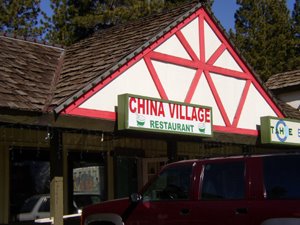
Of course China Village is run and staffed entirely by Spanish speakers. It seemed all the customers were also speaking Spanish. They were very nice and filled my cubie from waste oil they had in the kitchen. I didn't even have to dumster dive for it. Still don't have any idea what kind of oil it is but it is a lot nicer looking than the last batch: clear, reddish, not chunky.

Thursday, February 16, 2006

biggreentruck goes to yosemite


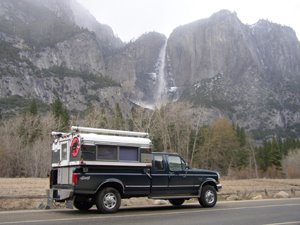
Tuesday was a great day for biggreentruck. We took off from the home base of www.vegcar.net and headed into Yosemite NP for a great day of skiing at Badger Pass. In the evening we set about filtering that oil from the fancy Fresno restaurant. I devised a 'new' system to keep the bag filter out of the tank and the mess relatively contained (we only had one minor spill). Turn a 1 gal water jug upside down, cut the bottom off, place the bag filter inside, remove the jug's cap and set the thing in the fill hole of the tank. Add oil and listen to it slowly drip into the tank. Keep the cap so you can plug up the bottom of the contraption between filter sessions.

Watched oil never filters so it seemed like a good time to start reading Biodiesel Power by Lyle Estill (available from New Society Publishers www.newsociety.com -- they've just gone carbon neutral). Too bad the book was so good I ended up focusing more on it than on the oil.

Basically, the book chronicals both the biofuels movement and Lyle's own adventures as a backyard brewer of biodiesel. Touching on everything from the science and chemisty of brewing and burning biodiesel to the politics of the National Biodiesel Board to the people powering the movement, Biodiesel Power is a great primer for alternative fuels.

Lyle's discussion of the do-it-yourself vs buy-a-kit mentalities really hit home as I fall somewhere in between the two not wanting things handed to me outright while not feeling the need to reinvent the wheel.

Emissions is something that came up in biggreentruck's recent education appearance. Lyle touches on that too when he talks about the EPA studies on rats living a box of emissions from B100. Seems, unlike the rats who lived in diesel emissions, the B100 rats lived long, healthy lives. I'm curious to know how rats fare in wvo emissions.

I'm anxious to finish the book to find out how Piedmont Biofuels Industrial LLC has fared both as a business venture and in their quest to create a closed energy loop using the waste products from biodiesel production to create more biodiesel, or I guess I could just go their website www.biofuels.coop. Since the book was printed on 100% post-consumer paper, I'll keep reading.

the quest for good grease


During our most recent ski trip in King's Canyon NP, biggreen truck made its very first educational appearance. The idea of veg was a bit confusing to the LA 10th graders at first but the ensuing discussion about energy production and efficiency convinced everyone that biggreentruck should make a habit of 'doing education.'

At the end of the program, biggreentruck headed down the hill to Fresno to pick up some oil from a rather high end restaurant. Seemed like a great idea at the time but we need a little more practice in judging the quality of oil while it sits in the dumpster. We scooped out about 7 gals on Monday and are still trying to filter it. It's a slow process for several reasons including: 1)the lovely bag filter is pretty gunked up and I can't figure a way to clean it without making a huge mess, 2)the colder temps have slowed the oil down, and 3)as it settled, this batch of oil had a lot of solid fats (gross) come to the surface.

Lest anyone think biggreentruck is just one misadventure after another, we took a slight detour on the way to Yosemite to visit Dan and his veg Mercedes 300. He graciously contributed 9 gals of beautifully filtered wvo, a few hours of stimulating conversion about veg and progressive politics and a quiet place to park for the night. Thanks, Dan!

The ongoing quest for good grease and few random vehicle problems were what I expected when I started ripping biggreentruck's fuel system apart last month. I did not expect (tho perhaps I should have) to find myself welcomed into a vibrant, diverse community of folks really making alternative fuels work. Which leads us to the next post.....

Monday, February 06, 2006

What's that red stuff?


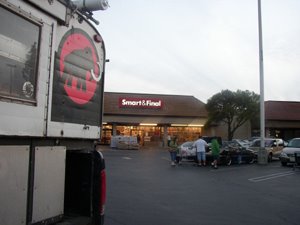
Ew...it's transmission fluid. Yuk. Luckily, there was Bob at Clutch Unlimited in Fresno who connected me with a rebuilt tranny in record time. Kind of put a damper on my 'quick trip to town' in between ski programs. After the tranny incident, I wasn't much for hunting down wvo. A couple of unsuccessful attempts that left me wishing I had a good on-board filter system with a pump; I saw a Smart and Final where I picked up 10 gals of virgin oil. It certainly isn't my first choice (it may not burn as cleanly and completely as wvo, it defeats the whole recycling thing and it's a bit pricey). Well, it was considerably cheaper per gal than diesel or even gasoline. With another week in the mountains, I hope to connect with someone in town who has wvo.

Sunday, January 29, 2006

another topic entirely

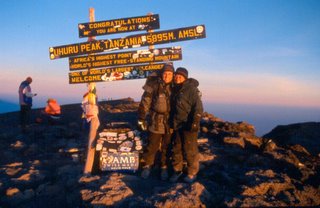
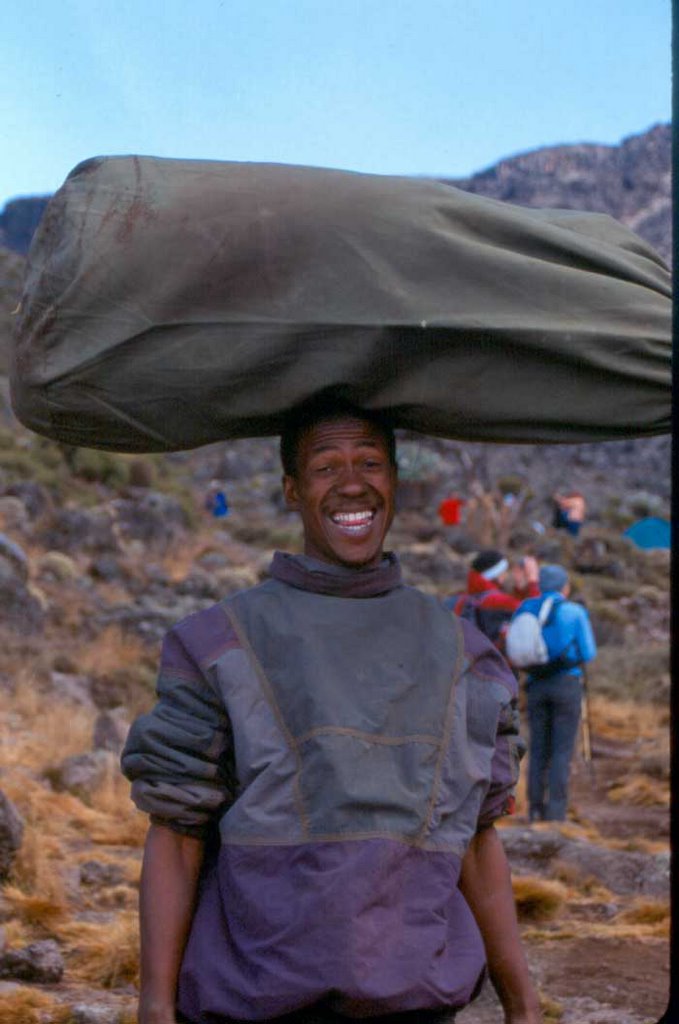
a few photos from kilimanjaro and kenya (sept-oct 05)


uhuru


sun rising over mawenzi

frankie the porter at baranco camp


sunrise, lamu, kenya

giraffe, hell's gate np, kenya

syke's monkey, gede ruins, kenya

running on veggie oil


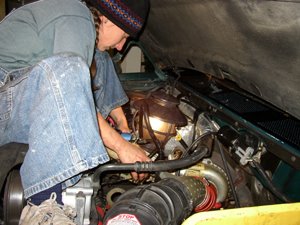
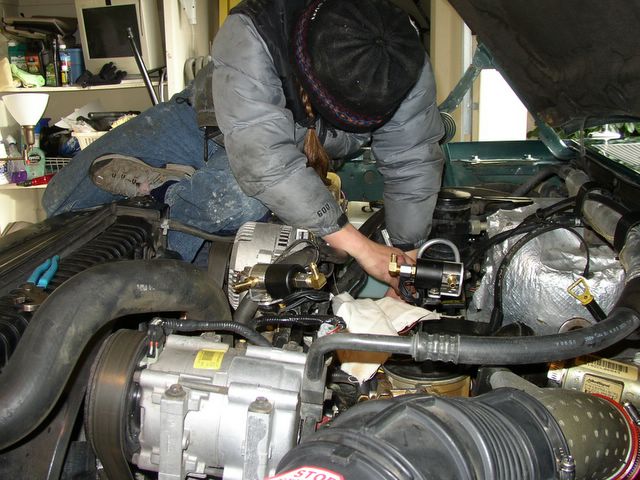
it was a bit of a challenge once the new fuel system was installed to get the biggreentruck running. it seems that once air gets into a powerstroke engine, it is very difficult to remove. the short version: once the air compressor was used to force fuel from the diesel tank back into the engine, the truck ran beautifully. the lesson: don't ever run out of fuel.

by then rush hour was approaching but we headed into seattle anyway to pick up about 15 gals of wvo that had been left at a biodiesel shop that 'doesn't do wvo.' i filtered it as i poured it into the veggie tank (that was a messy process but when i got back to gig harbor the dog didn't mind that i spilled veggie oil on my shirt), listened for the air bubbles to purge from the veggie lines and flipped the switch. a few minutes later, the smell coming from biggreentruck's exhaust changed from icky diesel to something akin to french fries. success!

the very next morning we departed the haven at gig harbor and headed south. first stop, portland, oregon, where we picked up 40 gals of prefiltered wvo from expert veg driver 'basshopper' (thank you!). it was lunch time when we hit corvallis and topped off the tank and a cubie at enviofuels (thanks ryan!).

by noon yesterday, biggreentruck rolled into fresno, ca, to meet up with the NAL crew and still had enough wvo to pull the hill to kings canyon np. 900 miles on roughly 9 gals of diesel doesn't seem too bad for a first trip.

Sunday, January 22, 2006

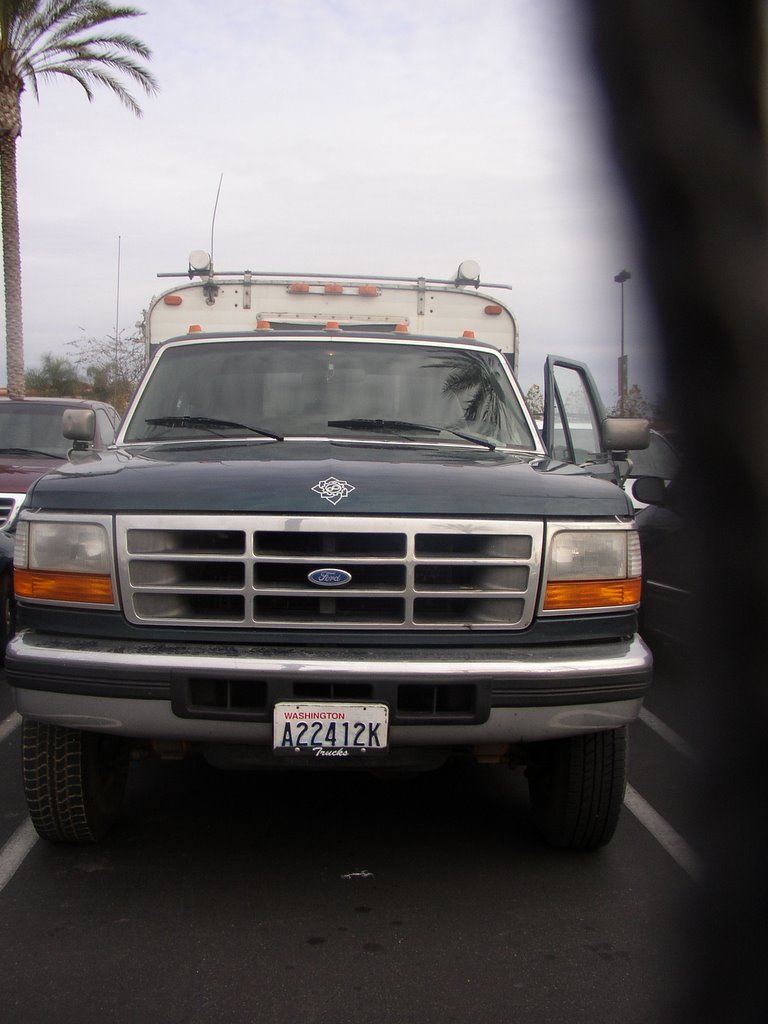
getting personal with the biggreentruck